Friendly Workplace
Employee Policies and Overview
◉ Human Rights Policy
Evergreen Steel is committed to the principles of gender equality and non-discrimination. In its talent recruitment practices, the Company does not discriminate on the basis of gender, race, age, marital status, family status, or any other protected characteristics. The Company strictly prohibits child labor and any form of forced or compulsory labor in accordance with applicable laws and regulations, and relevant requirements are clearly stipulated in its internal management regulations. Equal standards are applied to all employees, regardless of gender, with respect to training opportunities, compensation, and promotion.
To safeguard the fundamental human rights of employees and stakeholders, the Company supports and follows the principles set forth in the Universal Declaration of Human Rights and respects internationally recognized human rights principles. Guided by these principles, the Company has established a Human Rights Policy covering the provision of a fair, diverse and inclusive workplace, respect for workplace human rights, the provision of a safe and healthy workplace, and the protection of information security.In 2025, the Company reported no incidents or grievances related to discrimination, and there were no cases involving child labor or forced labor.
To promote harmonious labor-management relations and comply with applicable laws and regulations, the Company has established an Employee Grievance Handling Procedure. In addition, to prevent workplace sexual harassment and uphold gender equality and personal dignity in the workplace, the Company has formulated the Procedures for the Prevention, Complaint Handling, and Disciplinary Actions for Workplace Sexual Harassment in accordance with the Gender Equity Education Act, the Act of Gender Equality in Employment, the Sexual Harassment Prevention Act, and the Regulations for Establishing Measures for the Prevention of Sexual Harassment in the Workplace. The relevant policies and procedures are published on the Company’s electronic information platform for employee reference. Employees may submit complaints through the dedicated grievance hotline (02-2513-5655) or via email at comment@evergreennet.com. The Company has also established a Workplace Sexual Harassment Complaint Review Committee responsible for handling and investigating related complaints.
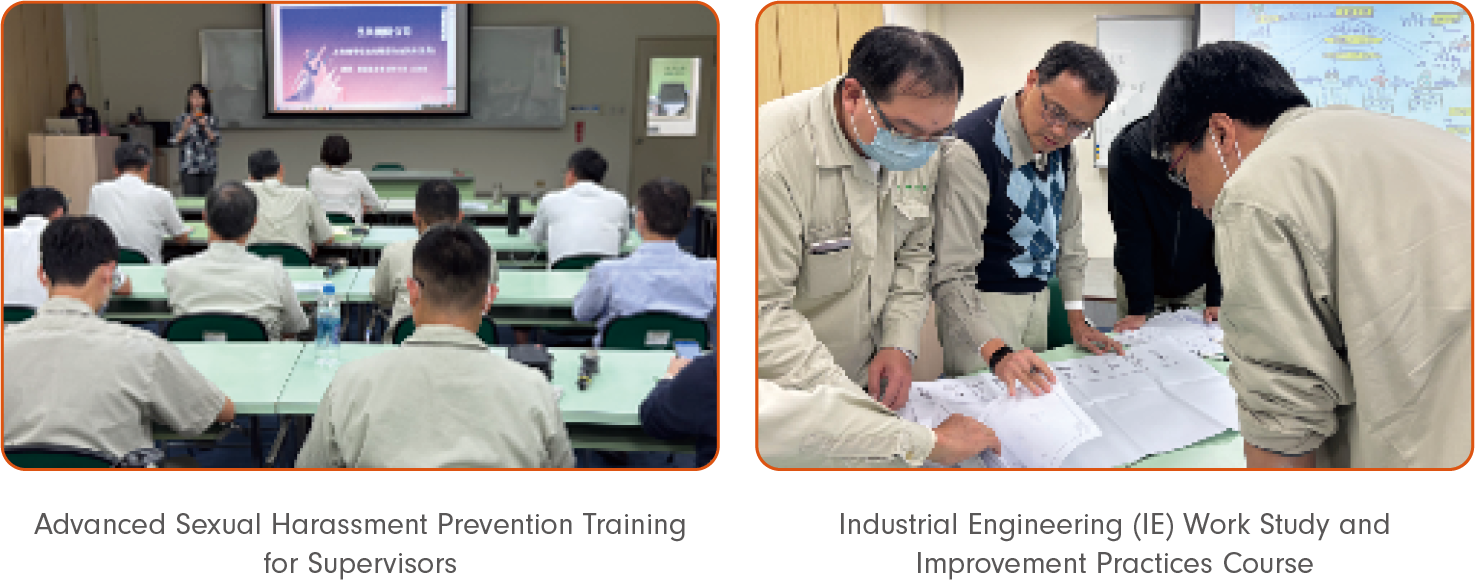
To continuously maintain a friendly and harassment-free workplace, the Company conducted sexual harassment prevention awareness training in 2025, with a total of 479 participants and 239.5 person-hours of training. In addition, to strengthen managerial awareness and ensure compliance with relevant regulations, the Company organized an Advanced Sexual Harassment Prevention Training Program for Supervisors, with 111 participants and 222 person-hours of training.
In accordance with its Human Rights Policy and with reference to internationally recognized human rights guidelines, Evergreen Steel continues to develop a human rights due diligence framework by integrating human resource management, occupational safety and health management, and supplier management mechanisms. The objective is to identify, prevent, and mitigate potential adverse human rights impacts arising from the Company’s operations and supply chain activities.
The scope of the Company’s human rights due diligence covers stakeholders including employees and suppliers. Through the annual material topic assessment process, the Company identifies significant issues associated with its operations and further evaluates human rights risk areas.
Based on the assessment results, employment topics (GRI 401: Employment) primarily cover compensation and benefits, working hours management, occupational safety and health, gender equality, and employee communication.
These topics serve as the basis for the Company’s human rights risk management.
1. Employee Human Rights Due Diligence: The Company implements employee human rights due diligence based on the framework of Commitment, Identification, Implementation, and Monitoring, as described below:
- Commitment: Implement the principles of fundamental human rights protection in accordance with the Company’s Human Rights Policy.
- Identification and Assessment: Identify potential human rights risks in operations and the supply chain through the annual material topic assessment process.
- Implementation Measures:
» Establish employee grievance and communication mechanisms, supported by dedicated handling procedures.
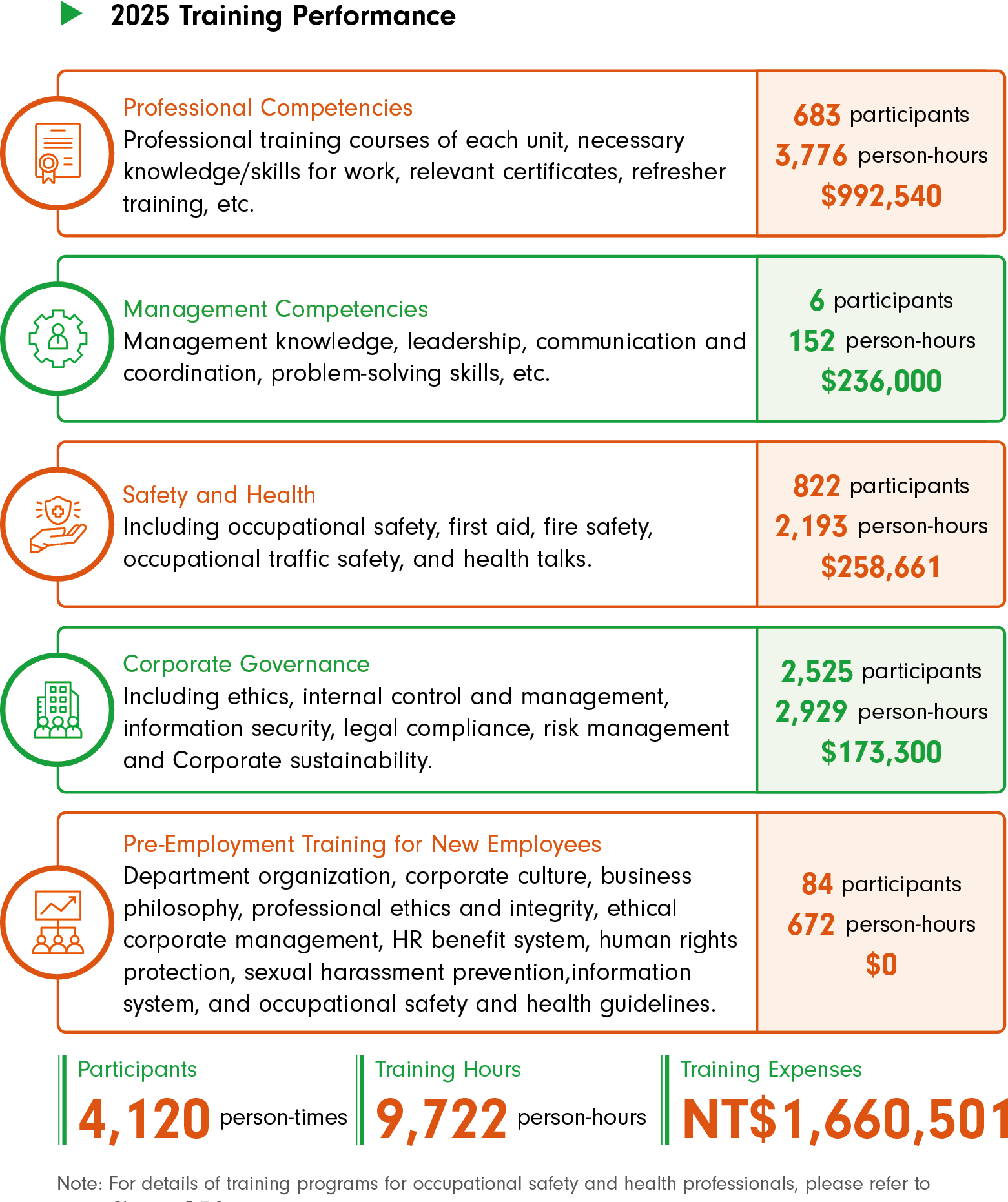
» Establish policies and procedures for the prevention of workplace sexual harassment and conduct related awareness campaigns and training programs. In 2025, sexual harassment prevention training programs recorded a total of 590 participants and 461.5 person-hours of training.
» Promote occupational safety and health and employee health management initiatives. In 2025, occupational safety and health training programs recorded 822 participants and 2,193 person-hours of training. In addition, the Company conducted 52 health consultation sessions and 12 health promotion seminars and activities. - Monitoring and Continuous Improvement: Continuously monitor implementation effectiveness and conduct improvements through grievance mechanisms and existing management procedures.
2.Supplier Human Rights Due Diligence: The Company incorporates human rights considerations into its supply chain management framework and strengthens supplier management through systematic processes.
- Assessment Scope: Major suppliers and contractors.
- Risk Identification: Assess suppliers’ human rights management performance through annual self-assessment questionnaires.
- Implementation Measures: Review questionnaire results and communicate with suppliers as the basis for management actions and improvement initiatives.
- Monitoring Mechanism: Conduct annual assessments and continuously track implementation.
Workforce Structure
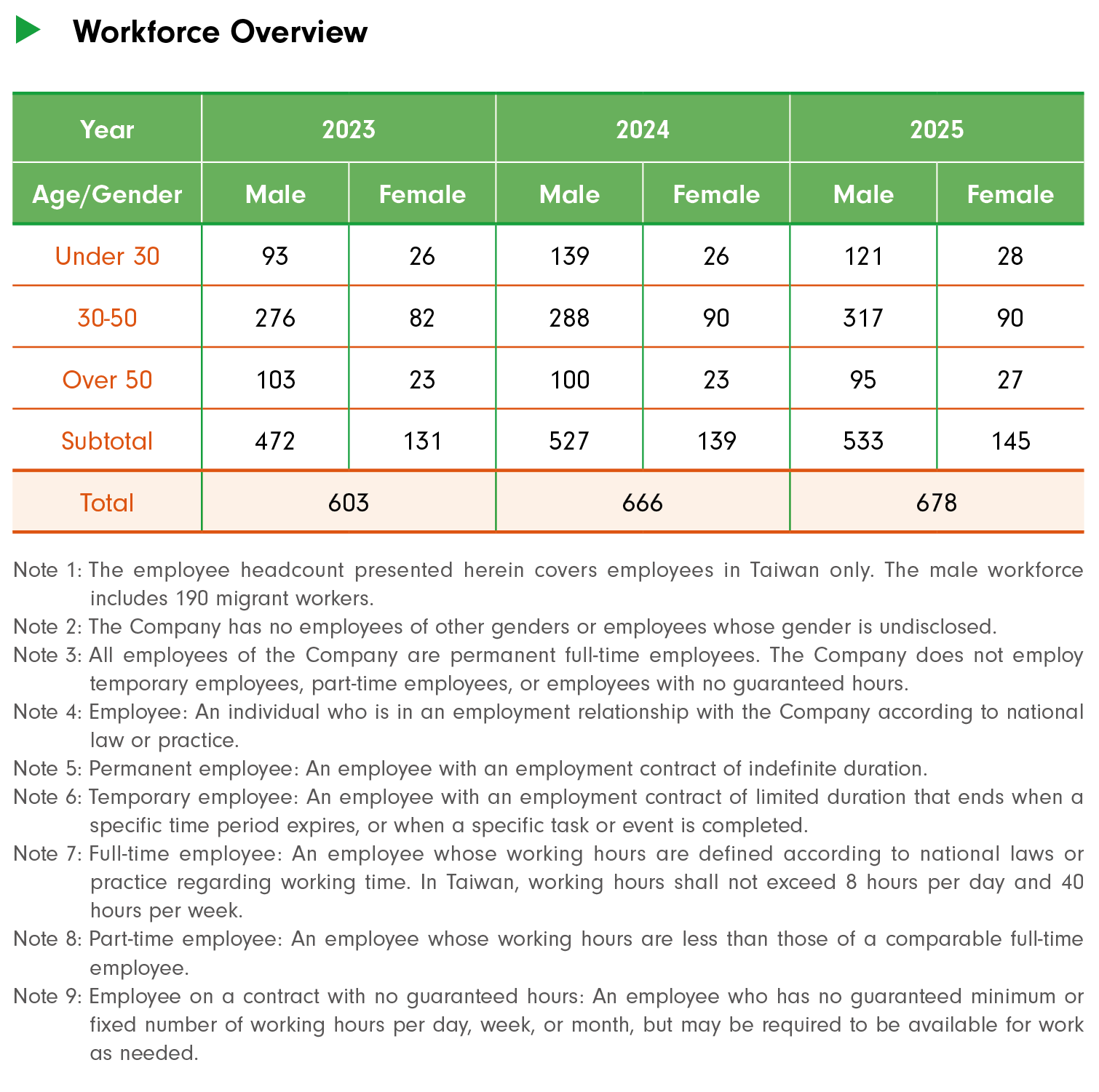
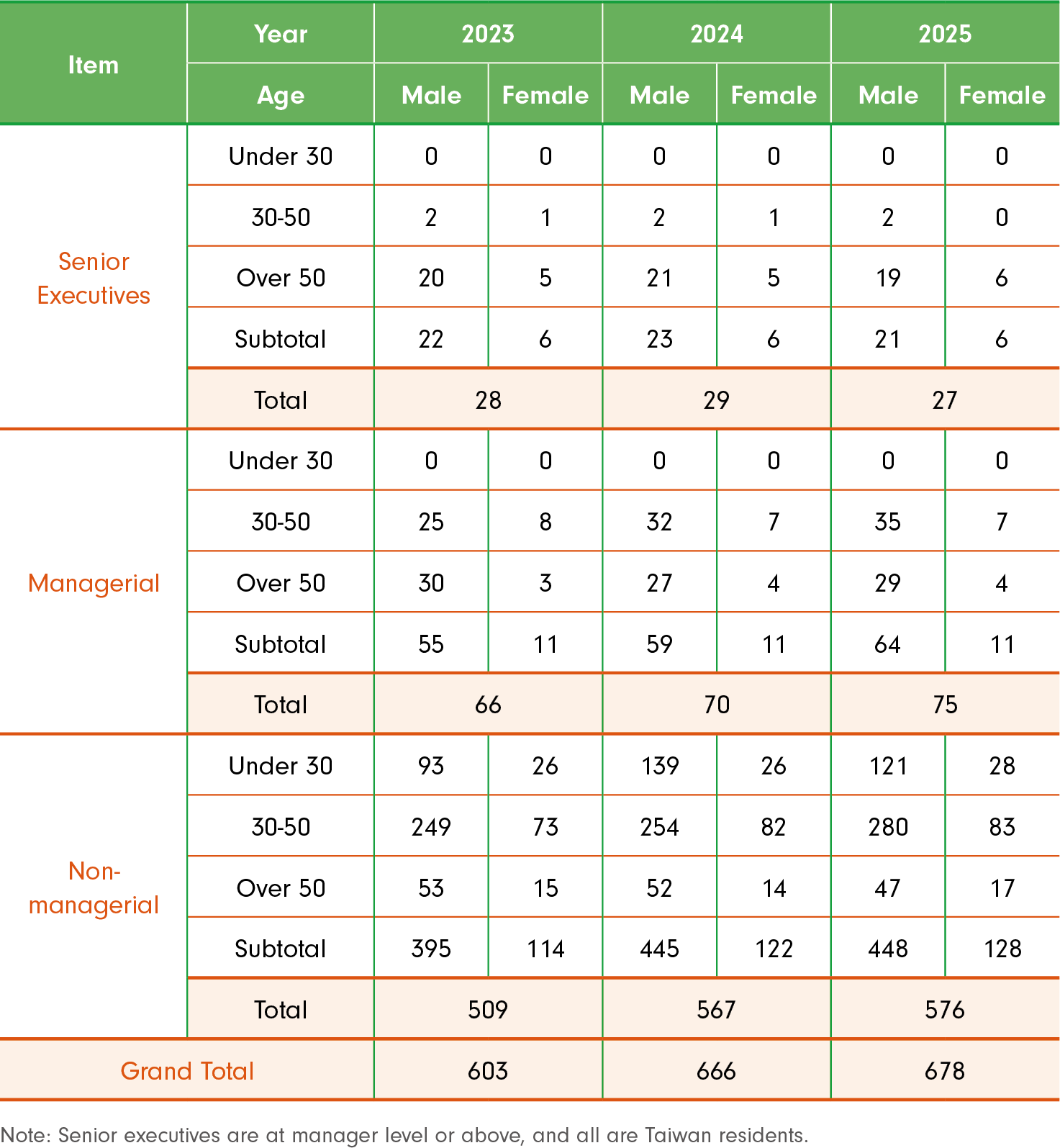
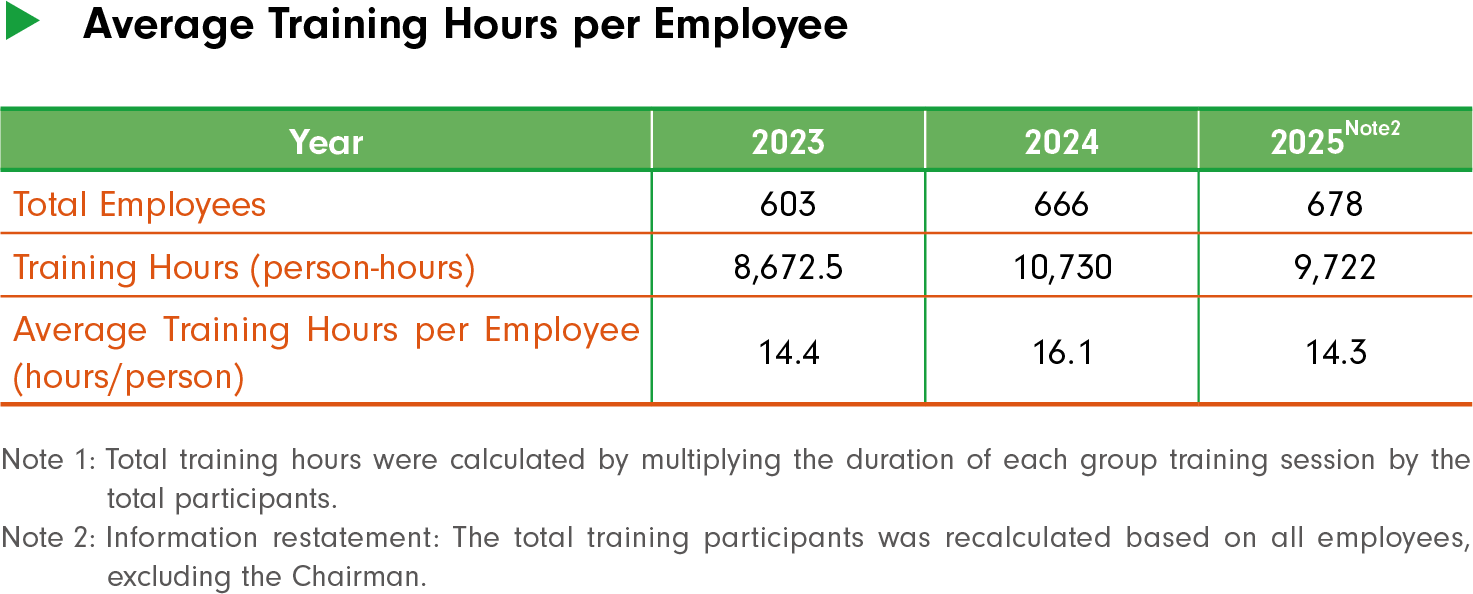
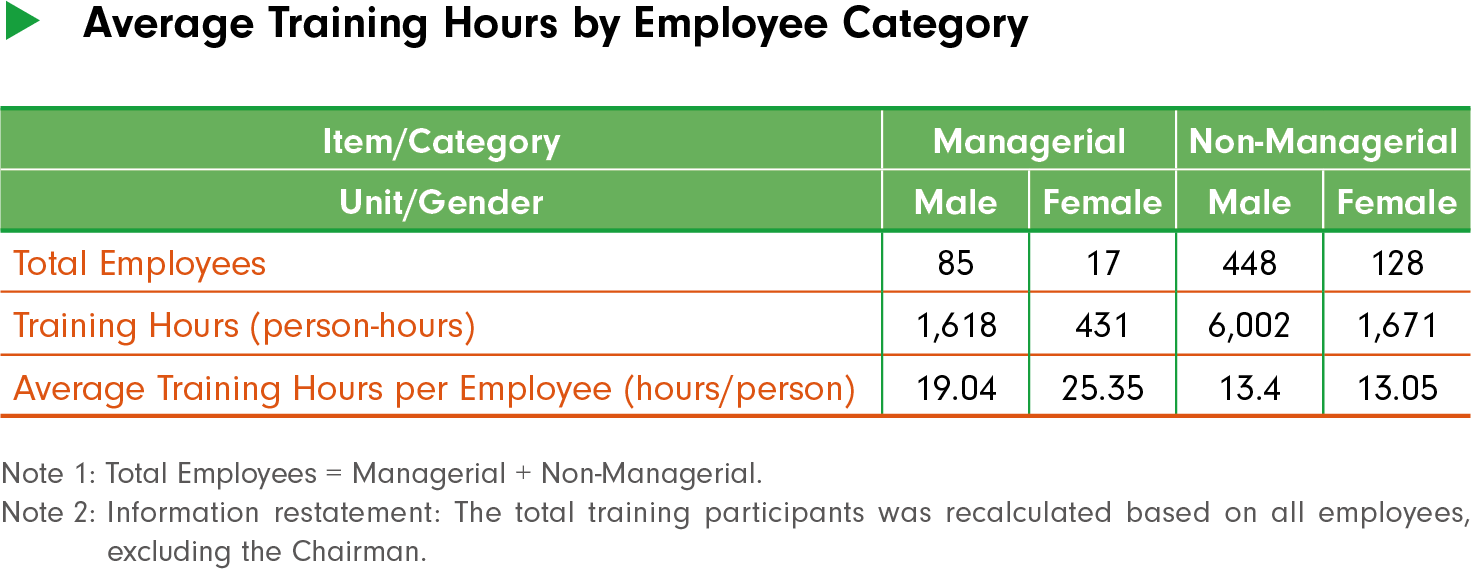
As of the end of December 2025, the Company had 678 employees. All employees are fulltime and permanent, with no temporary or part-time staff, and there are no employees on contracts with no guaranteed working hours. All senior executives are Taiwanese nationals and have been promoted internally from entry-level positions. They participate in job rotation programs based on organizational and business needs.
◉ 2025 Employment of Disadvantaged and Underrepresented GroupsTo support Taiwan’s Diversified Employment Development Program and comply with the People with Disabilities Rights Protection Act and other applicable labor regulations, the Company actively employs disadvantaged and underrepresented groups in accordance with relevant legal requirements as part of its commitment to fostering an inclusive workplace.
◉Non-Employee Workers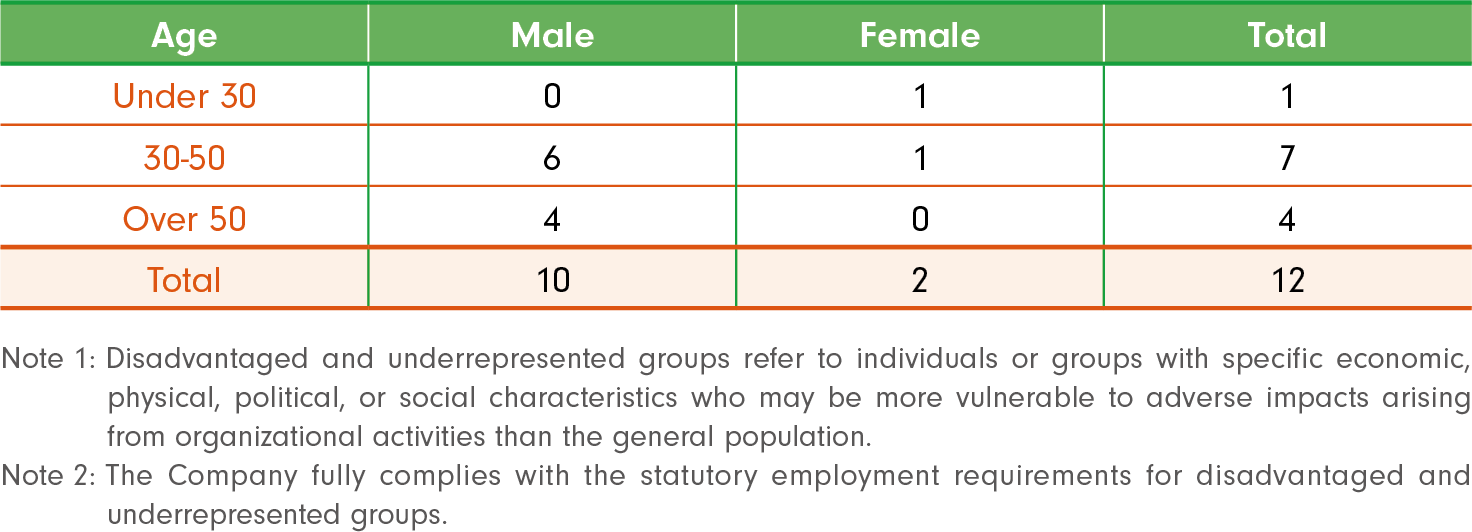
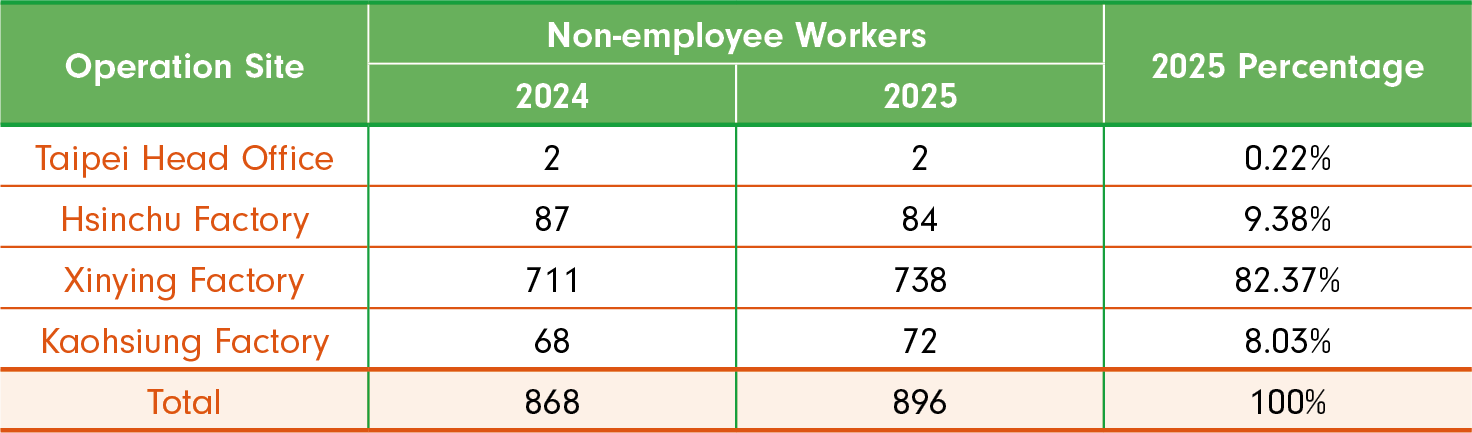
Non-employee workers refer to individuals who work for the Company but are not officially employed by the Company. These are contractors engaging in various types of work such as cleaning, security, catering, steel structure processing, scrap handling, container maintenance, and construction site steel structure installation. In 2025, there were a total of 896 non-employee workers, remaining generally stable compared with the previous year.
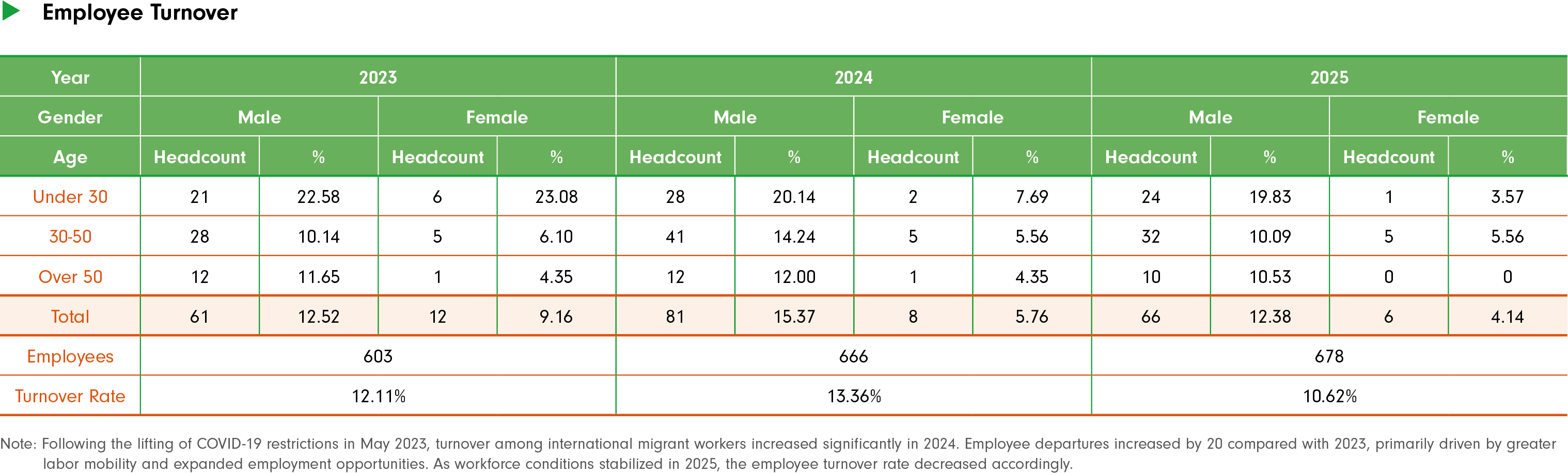
Talent Recruitment and TurnoverEmployees are the Company’s most important asset, as well as the main driving force of sustainable growth. When new employees join the Company, we provide pre-employment training, which includes an introduction of the workplace of each department and organization, the Company’s corporate philosophy, code of conduct and ethical standards, ethical corporate management and code of conduct, an introduction to key HR policies, employee benefits and management systems and human rights policies, sexual harassment prevention, information system operations, occupational safety and health, and other basic guidelines to help new employees adapt quickly to the workplace. In 2025, 84 employees joined the Company.
Among them are 12 female employees and 72 male employees (including migrant workers).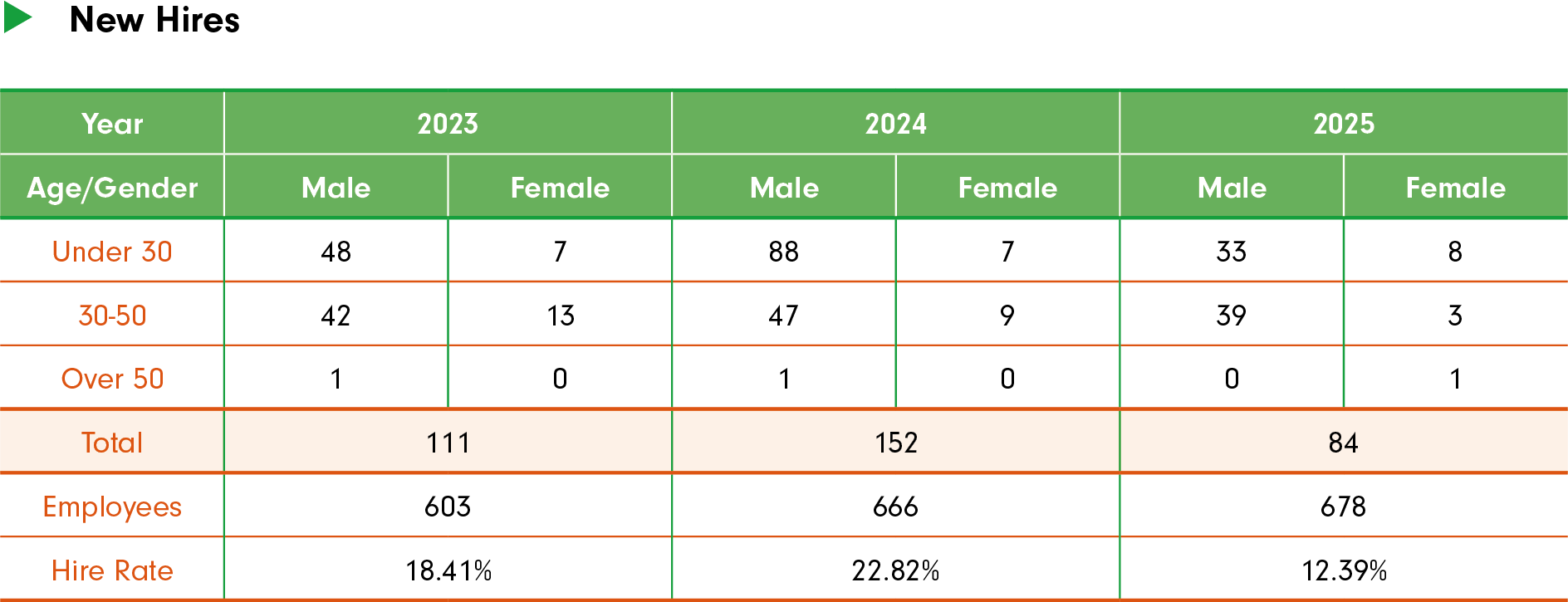
◉ Freedom of Association and Collective BargainingNeither the Company nor its suppliers had labor unions or collective bargaining agreements in place during 2025. However, in order to respect the freedom and rights of employees to associate, we regularly hold labormanagement meetings as a platform for coordination and communication, ensuring the protection of workers’ rights and interests.
◉ 2025 Employee Satisfaction Survey
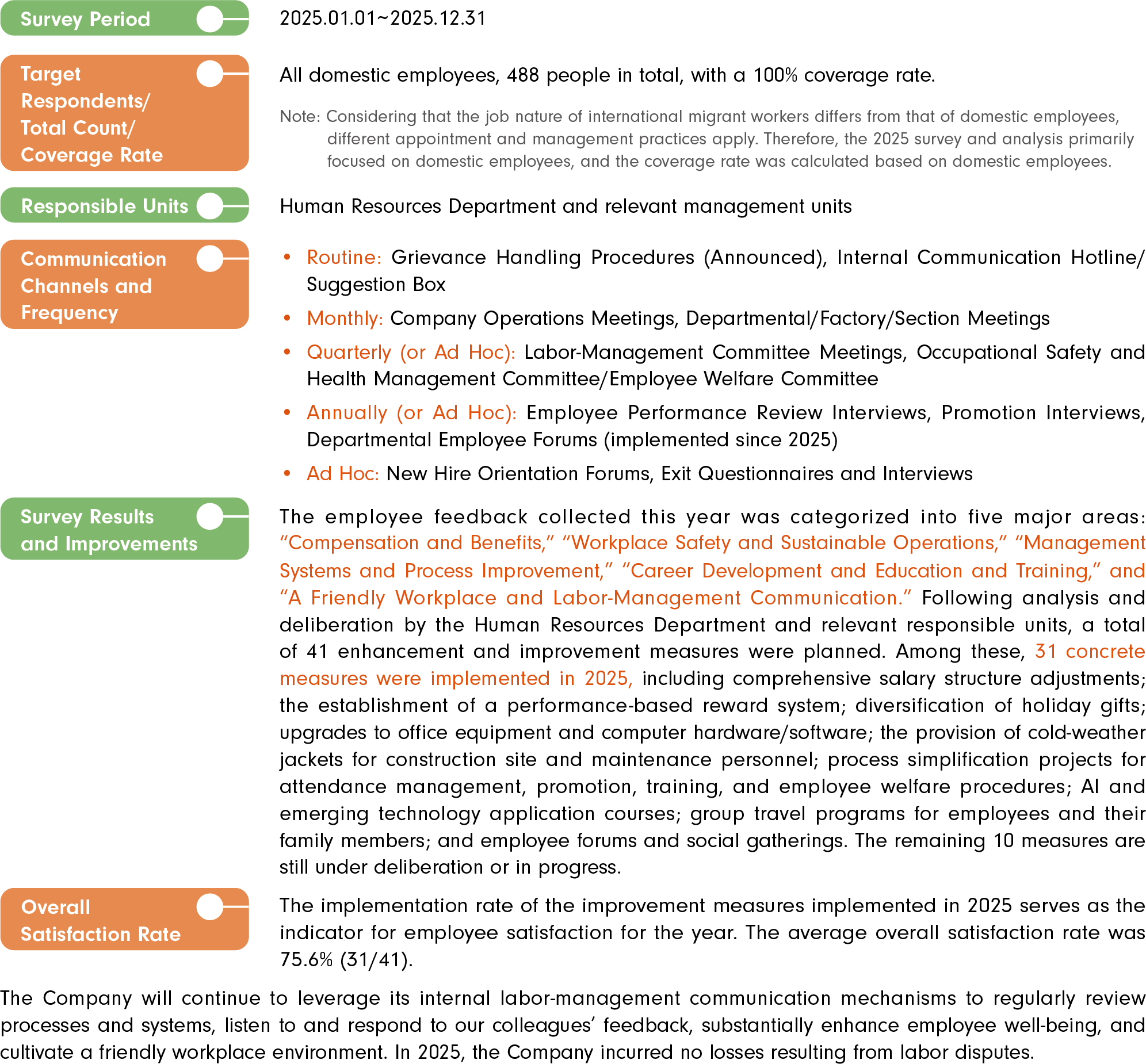
The Company values human rights and complies with labor-related laws and regulations, and constructs multiple grievance channels, which are handled by supervisors of all levels and the human resources unit, while also establishing complaint handling measures to make sure that all complaints are handled in a timely and confidential manner, ensuring smooth channels of communication between employees and supervisors.The Company has long utilized various communication channels, as well as regular and ad hoc meetings and interviews, to listen to and gather feedback from our colleagues. This feedback is then analyzed by the Human Resources Department and relevant managing authorities to formulate and implement improvement measures. To strengthen the two-way labor-management communication mechanism, starting from 2025, in addition to using the aforementioned channels for formal and comprehensive surveys, the Company has expanded the implementation of rotating employee forums across departments. By directly and proactively engaging with colleagues to gather their feedback, the management can respond to employees’needs more swiftly and accurately, and take appropriate corrective actions.
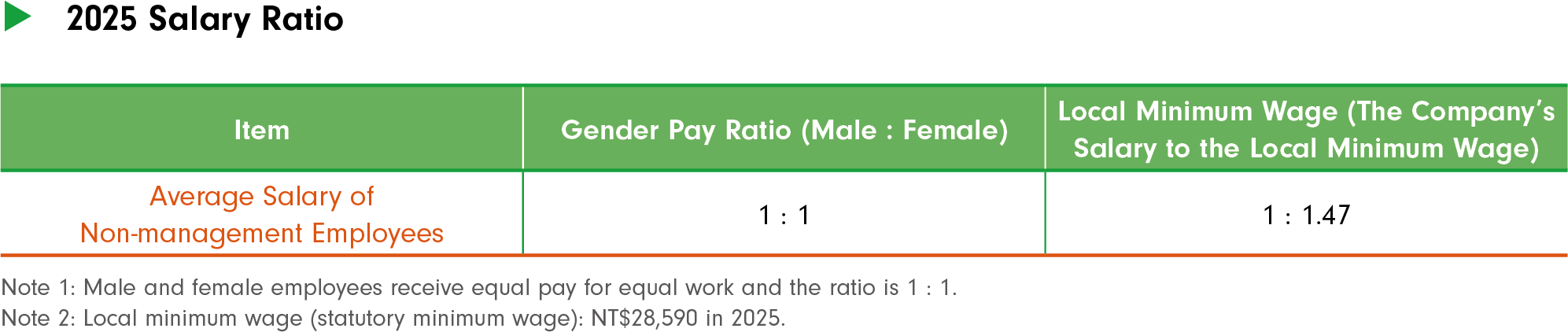
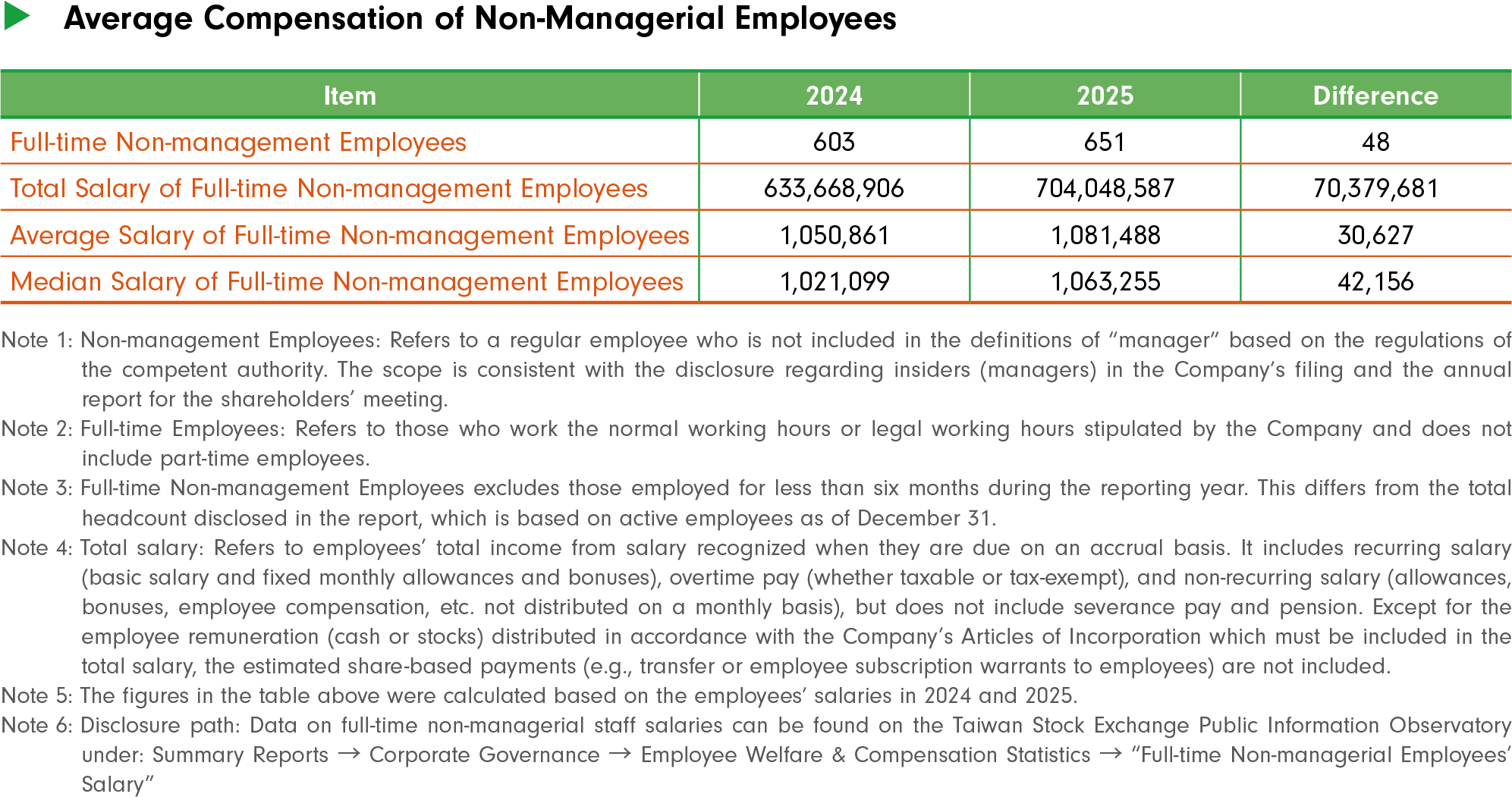
Salary and BenefitsThe Company ensures that the basic salaries of all employees are no lower than the statutory minimum wage. Compensation is determined based on employees’ educational background, professional skills, and experience, and is not differentiated by gender, geographic location, ethnicity, political affiliation, or any other non-job-related factors. Appropriate compensation structures are established for different professional and job levels. Base salaries, allowances, performance bonuses, and other remuneration are provided in compliance with the Labor Standards Act and applicable regulations. The Company also regularly benchmarks compensation practices against industry standards to ensure overall remuneration remains competitive in the labor market. When annual profits are generated, the Company allocates at least 0.5% of annual profits as employee compensation in accordance with its Articles of Incorporation, with no less than 60% of such compensation reserved for frontline employees. In addition, year-end bonuses and on-site operation bonuses are awarded based on the Company’s operating performance and employees’ individual performance to recognize and reward their contributions. Furthermore, ESG-related performance indicators, including environmental protection, energy conservation and carbon reduction, resource recovery, green procurement and supply chain management, occupational safety and health, and information security, are incorporated into the overall performance evaluation and remuneration framework. This approach encourages employees to contribute to the achievement of the Company’s sustainability targets and long-term sustainable development.



◉Minimum Notice Periods Regarding Operational ChangesThe Company may terminate a labor contract in one of the following situations:
• Where the employer’s business is suspended, or has been transferred.
• Where the employer’s business suffers operating losses, or business contractions.
• Where force majeure necessitates the suspension of business for more than one month.
• Where the change of the nature of business necessitates the reduction of workforce and the terminated employees cannot be reassigned to other suitable positions.
• A particular worker is clearly not able to perform satisfactorily the duties required of the position held.
• When other reasons of termination of labor contract arise.Where an employer terminates a labor contract the provisions set forth below shall govern the minimum period of advance notice:
• Where a worker has worked continuously for more than three months but less than one year, the notice shall be given ten days in advance.
• Where a worker has worked continuously for more than one year but less than three years, the notice shall be given twenty days in advance.
• Where a worker has worked continuously for more than three years, the notice shall be given thirty days in advance.Employee Development and Training
Talent Cultivation
The Company places great importance on employees’ physical and mental well-being, workplace safety, environmental protection, and compliance with ethical standards and workplace conduct. To support employee growth and sustainable corporate development, the Company has established a comprehensive training and development system that provides employees with comprehensive learning opportunities. As our employees are our most valuable asset, we respect their rights and value their opinions while placing particular emphasis on occupational safety and health. By fostering a safe and healthy workplace and supporting employees’ professional and personal development, the Company strives to create a workplace where employees can work with satisfaction, realize their potential, and contribute to a harmonious and mutually beneficial labor-management relationship.
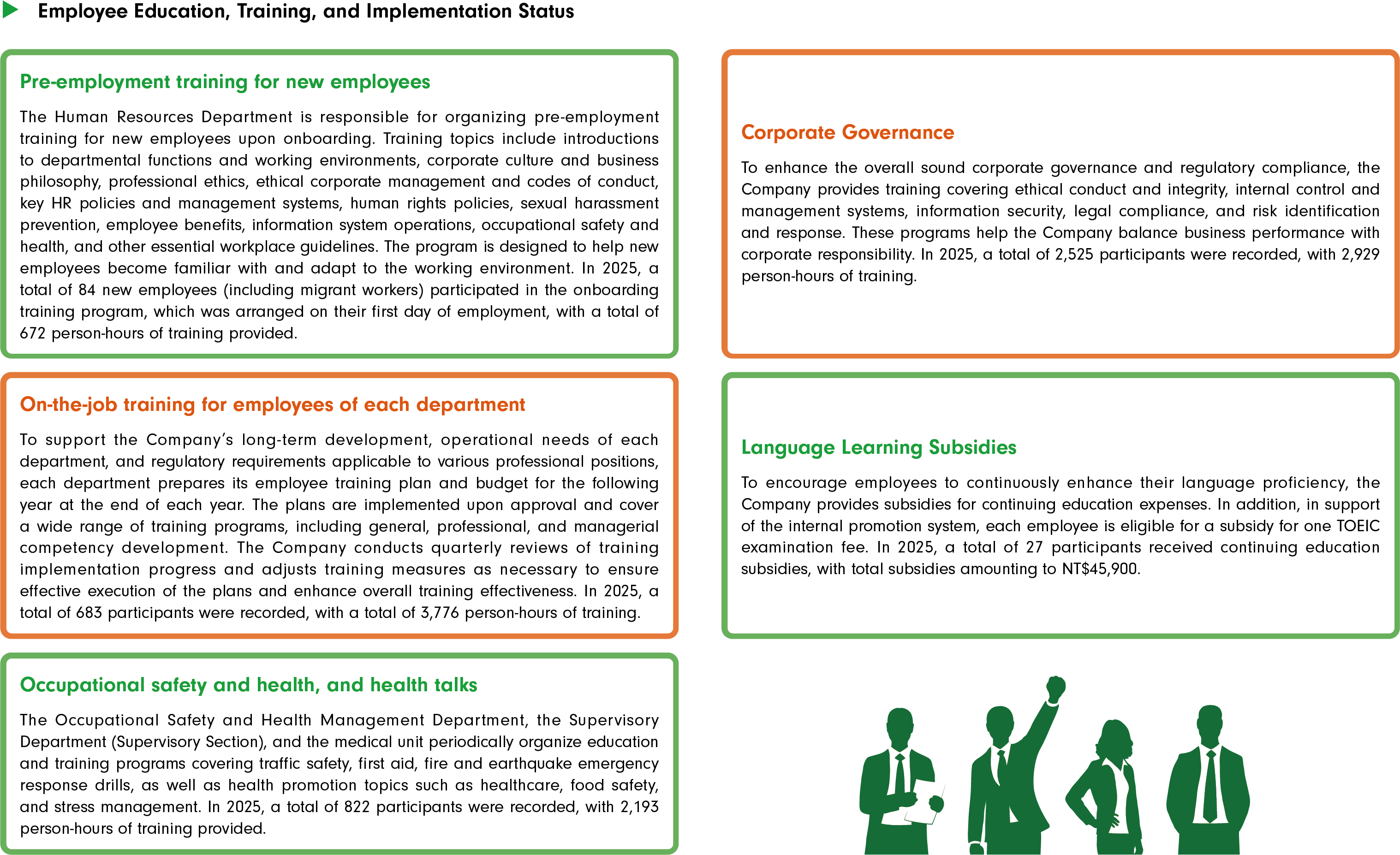
Employee training programs are divided into pre-employment training and on-the-job training. For new employees, the Human Resources Department arranges orientation programs covering organizational structure and departmental functions, workplace environment introduction, corporate culture and business philosophy, professional ethics, integrity management and codes of conduct, key personnel policies and management systems, human rights policy, sexual harassment prevention, employee benefits, information system operation, and occupational safety and health requirements.
Through education and training, employees can enhance their professional competencies while also supporting the Company in obtaining project qualifications, contractor qualifications, professional licenses, and certifications. By providing diverse learning resources, the Company helps employees strengthen professional expertise, unlock their potential, enhance employability, and support competency development and lifelong learning.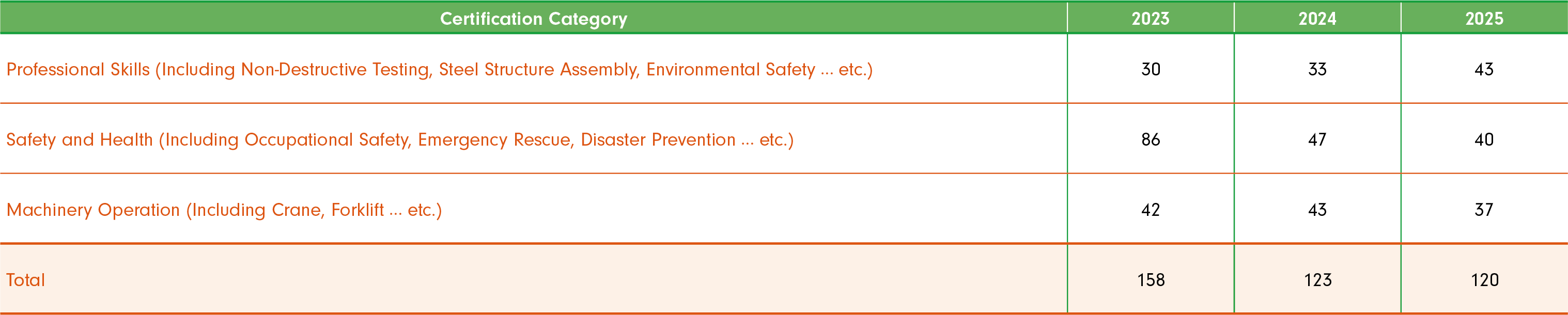
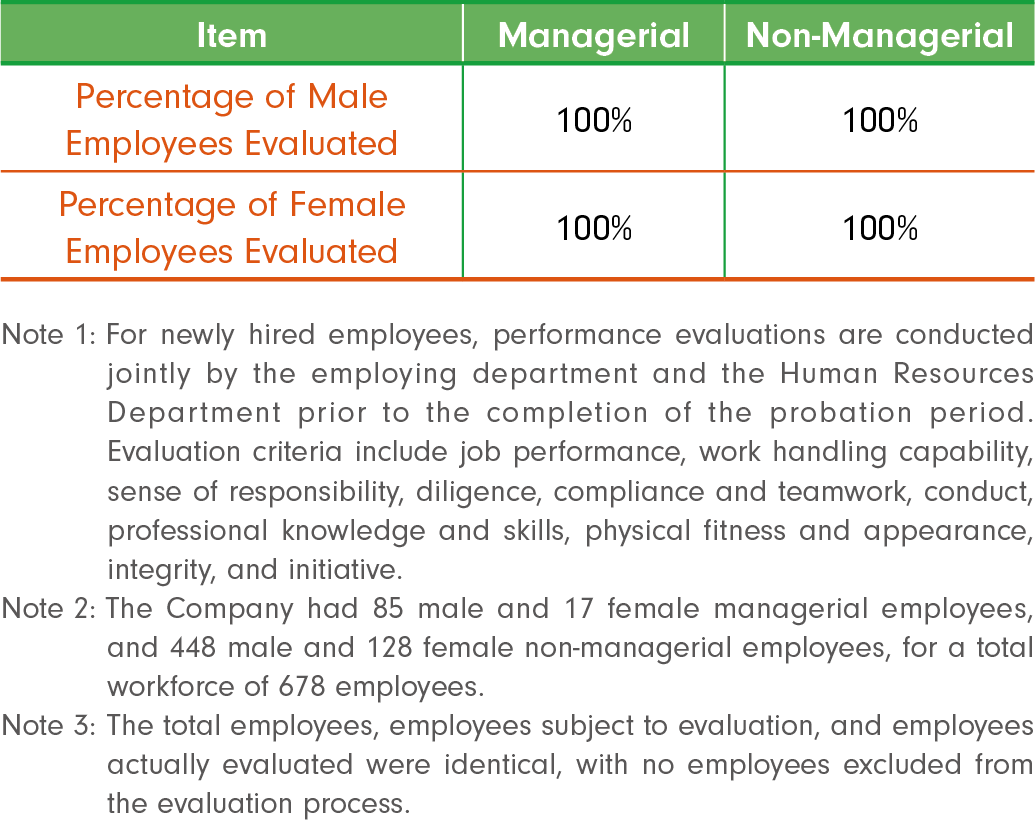
◉Performance Management and DevelopmentTo ensure a fair, objective, and transparent performance evaluation of employees’ job competencies, performance, and conduct, supervisors at all levels are responsible for continuously documenting employees’ work performance, professional conduct, and professional attitude. Performance evaluations are conducted annually in March and September to assess performance outcomes. All employees are evaluated based on their job grade and the aforementioned evaluation principles, without distinction based on gender. All evaluation records are kept confidential by the Human Resources Department and are not disclosed except to the evaluator and authorized Human Resources personnel. Evaluation results serve as references for promotions, salary adjustments, and year-end bonus allocations, and also provide an important basis for talent development and employee growth. The performance evaluation distribution is presented below:
Employee Care
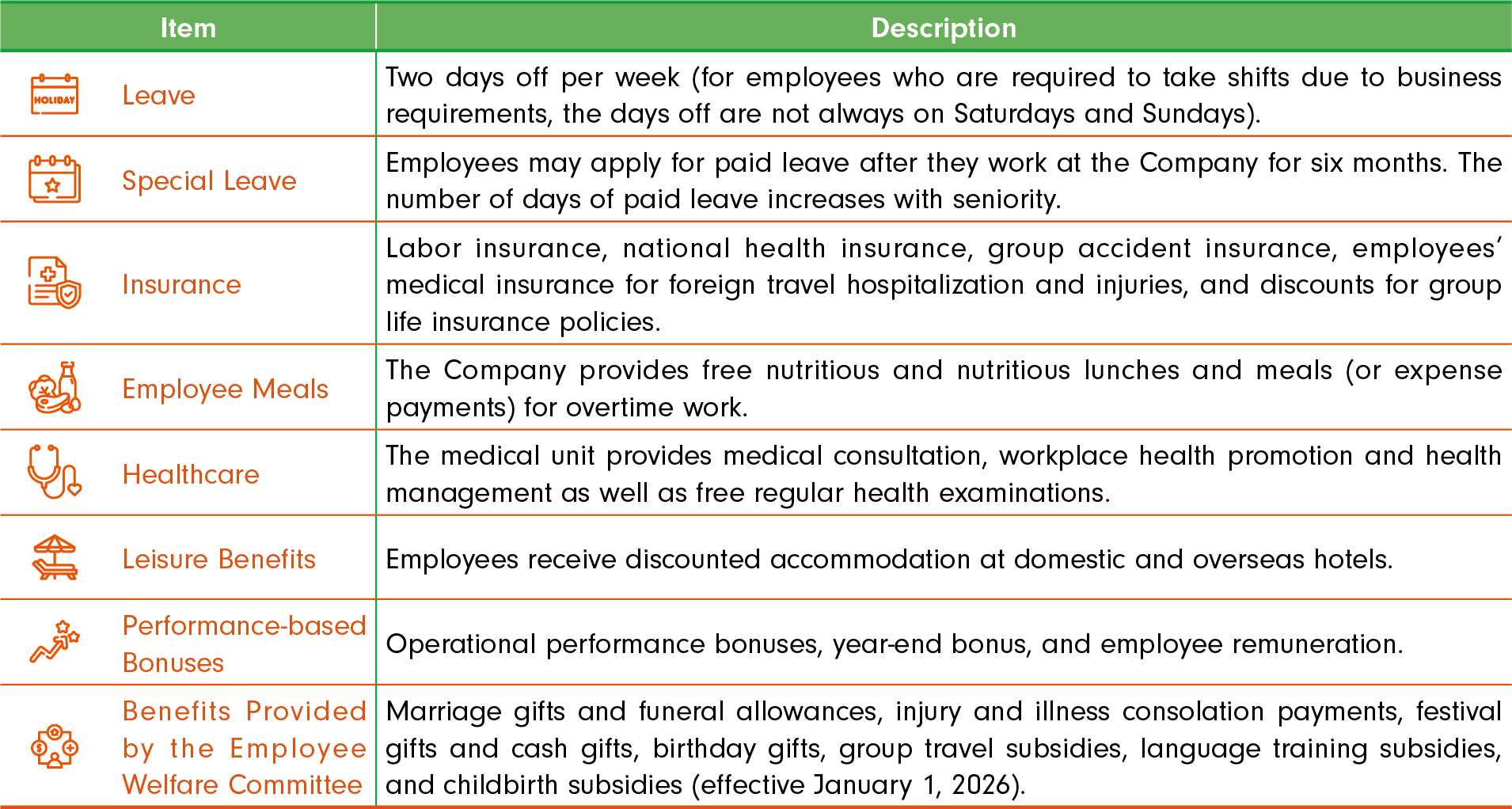
◉Employee BenefitsEvergreen Steel is committed to maintaining a rational and compliant system for all employment-related matters. Attendance, leave, retirement, and related practices are handled in accordance with the provisions of the Labor Standards Act. Additionally, annual bonuses are granted based on the Company’s operational performance and individual performance evaluations. Under a well-structured personnel and welfare system, the Company enjoys a sound and harmonious labor-management relationship. Key agreements and employee rights protections are outlined as follows:
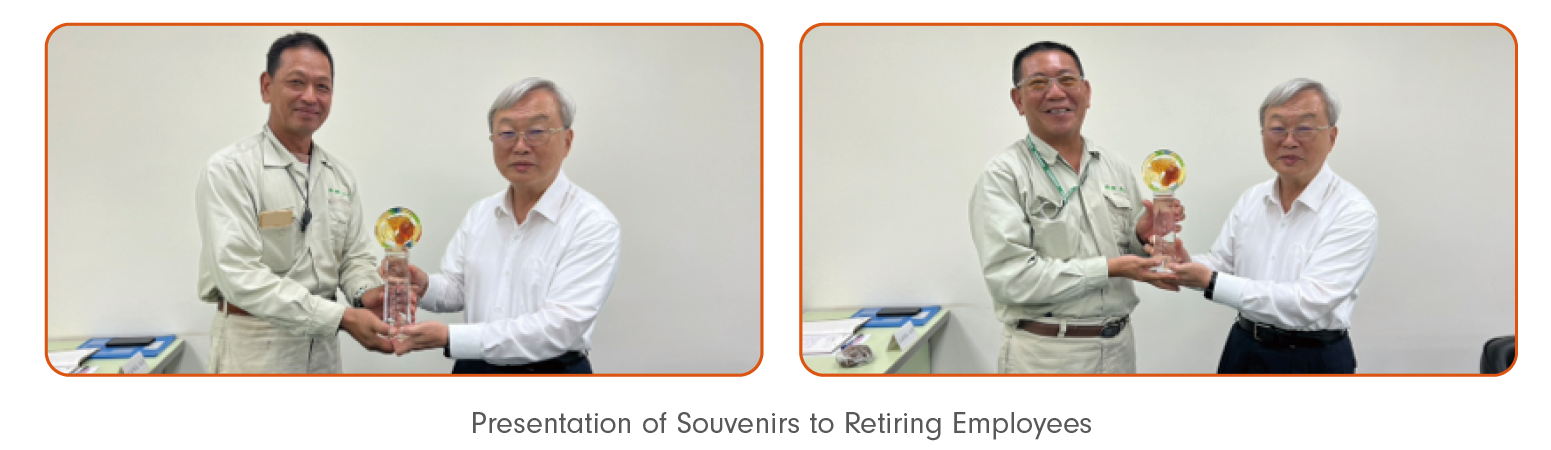
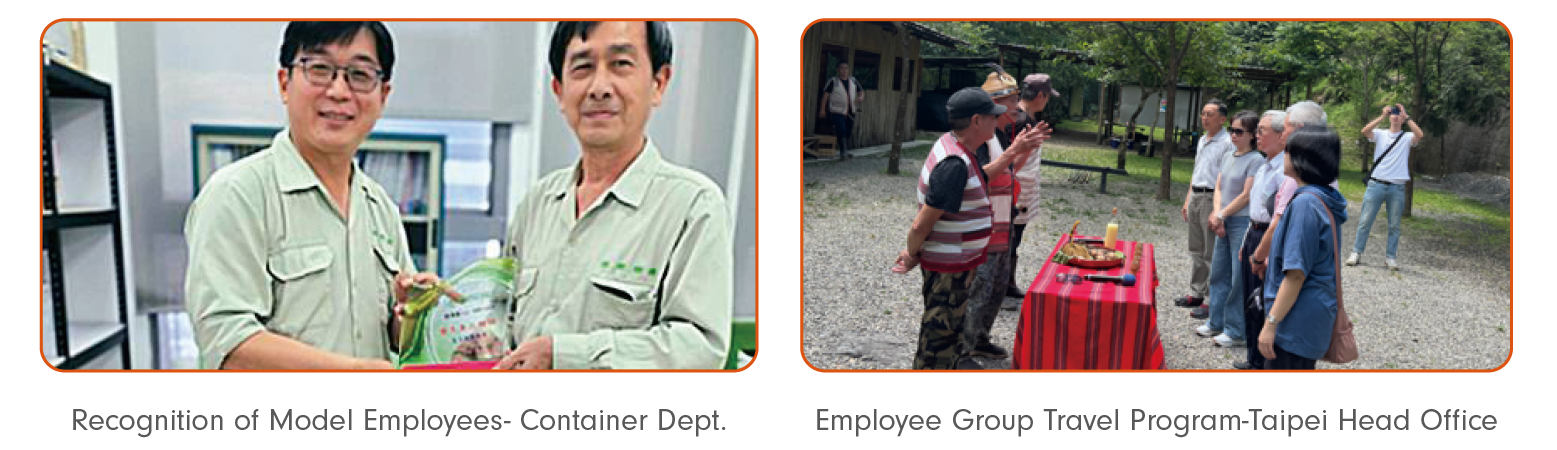
To encourage employees to fully embody the “Evergreen Spirit” in their daily work, the Company organizes an annual Outstanding Employee Recognition Program. Each department nominates candidates, and outstanding employees who best demonstrate the values of “Challenge, Innovation, and Teamwork” and serve as role models for all employees are selected through a joint evaluation process. The selected employees are publicly recognized and presented with plaques and gift vouchers. In addition, the Company organizes retirement farewell events and presents commemorative gifts to retiring employees in recognition of their dedication and contributions throughout their service.
To enhance employee benefits and help alleviate childcare-related financial burdens, the Company introduced a Childbirth Subsidy Program in 2026. Under the program, employees or their spouses who have a child during the year are eligible to receive a subsidy of NT$10,000 for each newborn child. The program is intended to provide tangible support for employees’ family care needs and further promote employee well-being and a familyfriendly workplace. As of the first quarter of 2026, a total of two employees (or their spouses) had met the eligibility requirements, and subsidies totaling NT$20,000 had been granted.
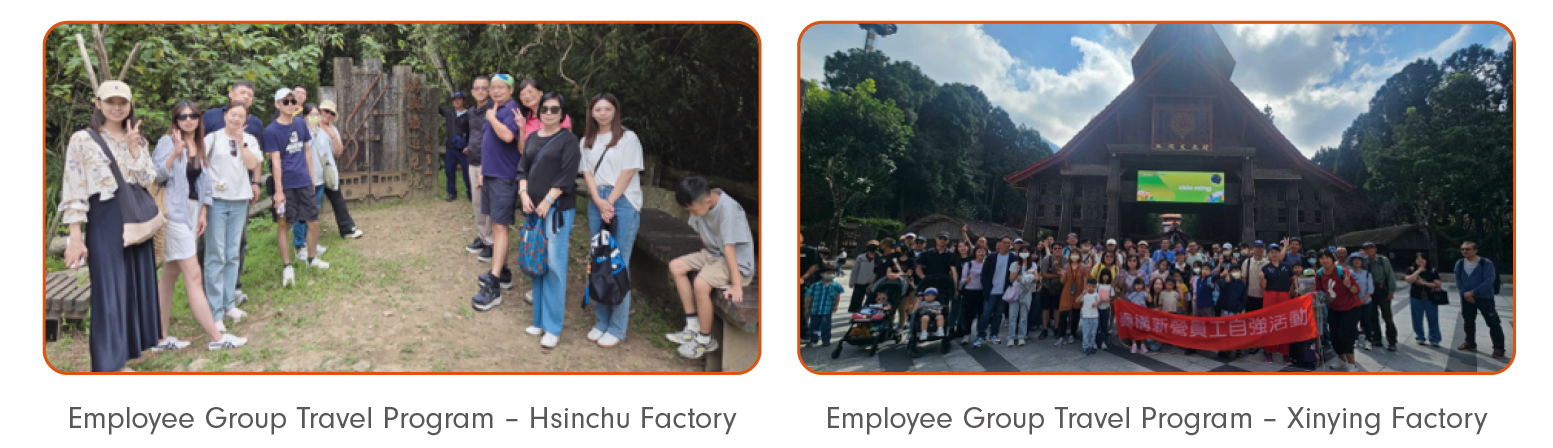
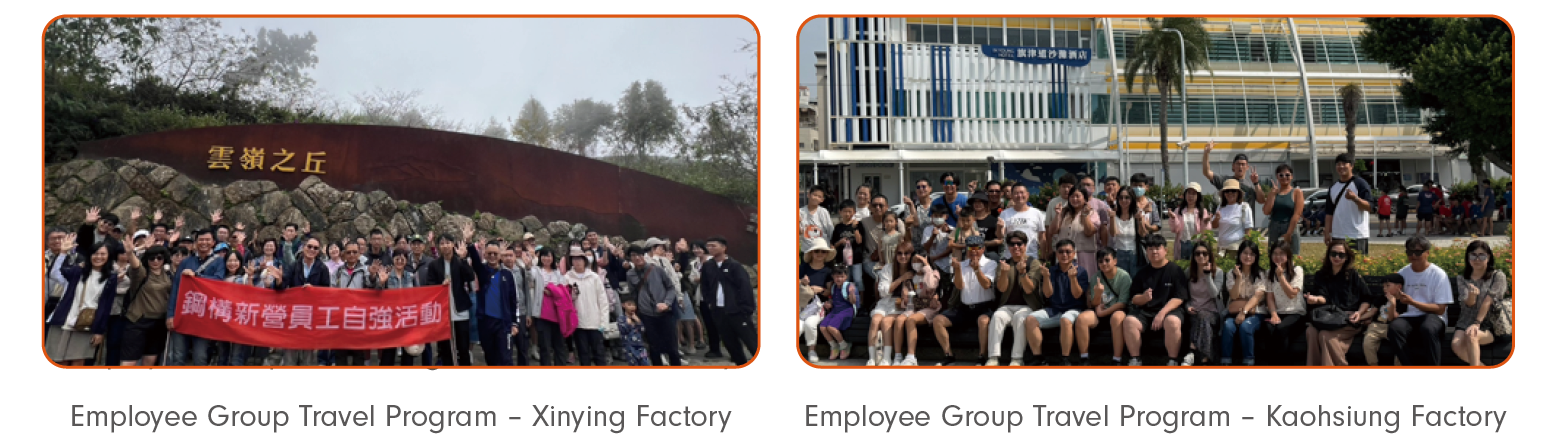
In addition, to foster interaction and strengthen relationships among employees, while encouraging healthy outdoor recreational activities, the Company organizes group travel programs for employees across different regions. These activities provide opportunities for employees and their family members to gather together, enhance interpersonal connections, and promote physical and mental well-being.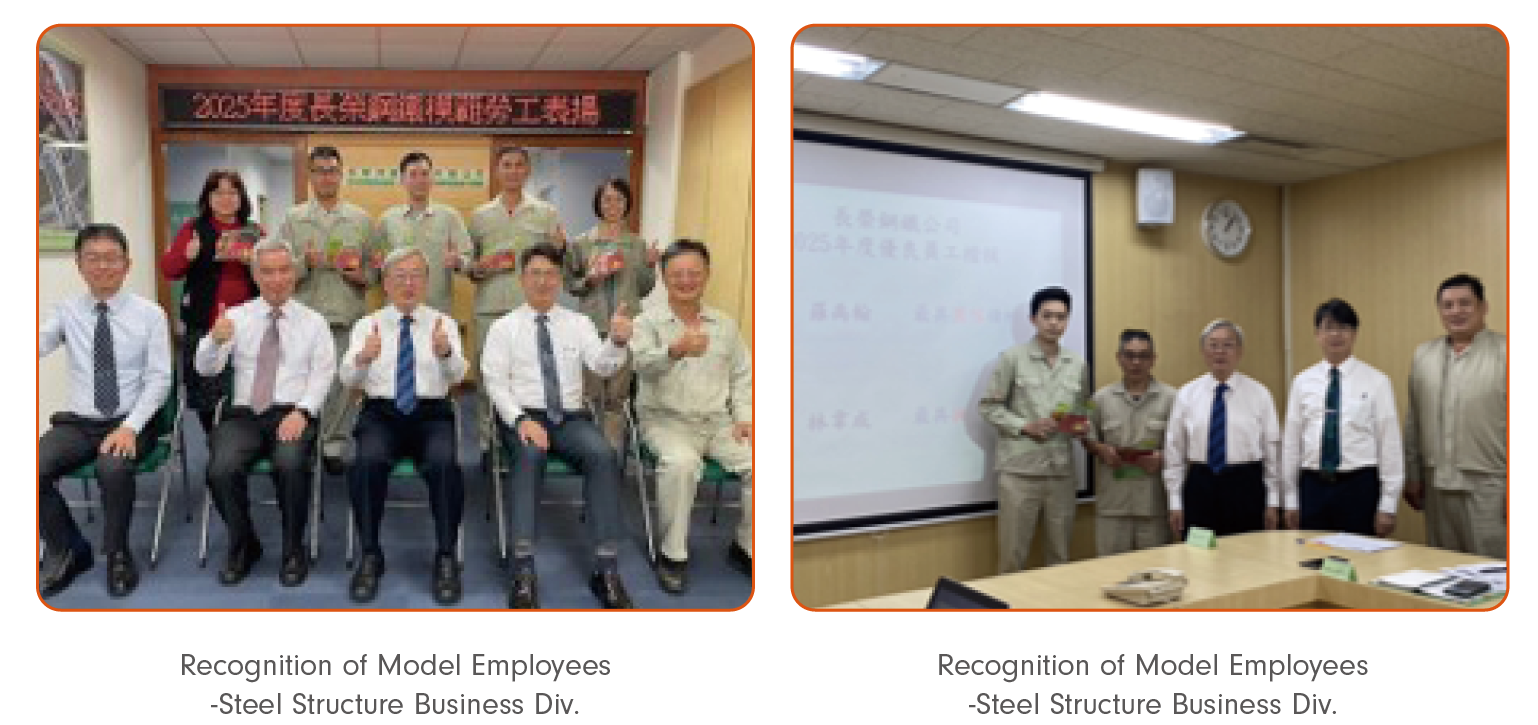
◉Pension SystemThe Company’s Labor Pension Supervisory Committee was established on January 23, 1987, and was approved by the Taoyuan County Government under Letter No. (76) Fu-She-Lao-Zi No. 10389. The Company has established the Employee Retirement Regulations, in accordance with Article 2 of the Regulations for the Allocation and Management of Labor Retirement Reserve Funds, contributes an amount equivalent to 6% of total monthly payroll to the labor retirement reserve fund account maintained with the Bank of Taiwan. The retirement reserve fund account has been fully funded in accordance with regulatory requirements. As of December 31, 2025, the balance of the labor retirement reserve fund account maintained with the Bank of Taiwan totaled NT$380,839,413. Based on actuarial valuation results, the reserve fund is sufficient to meet future employee retirement obligations.
According to the Labor Pension Act, the employer shall pay 6% of the employees’ monthly salary as the pension reserve fund to the employees’ personal pension account for all employees who opt for the pension system under the Act starting from July 1, 2005.
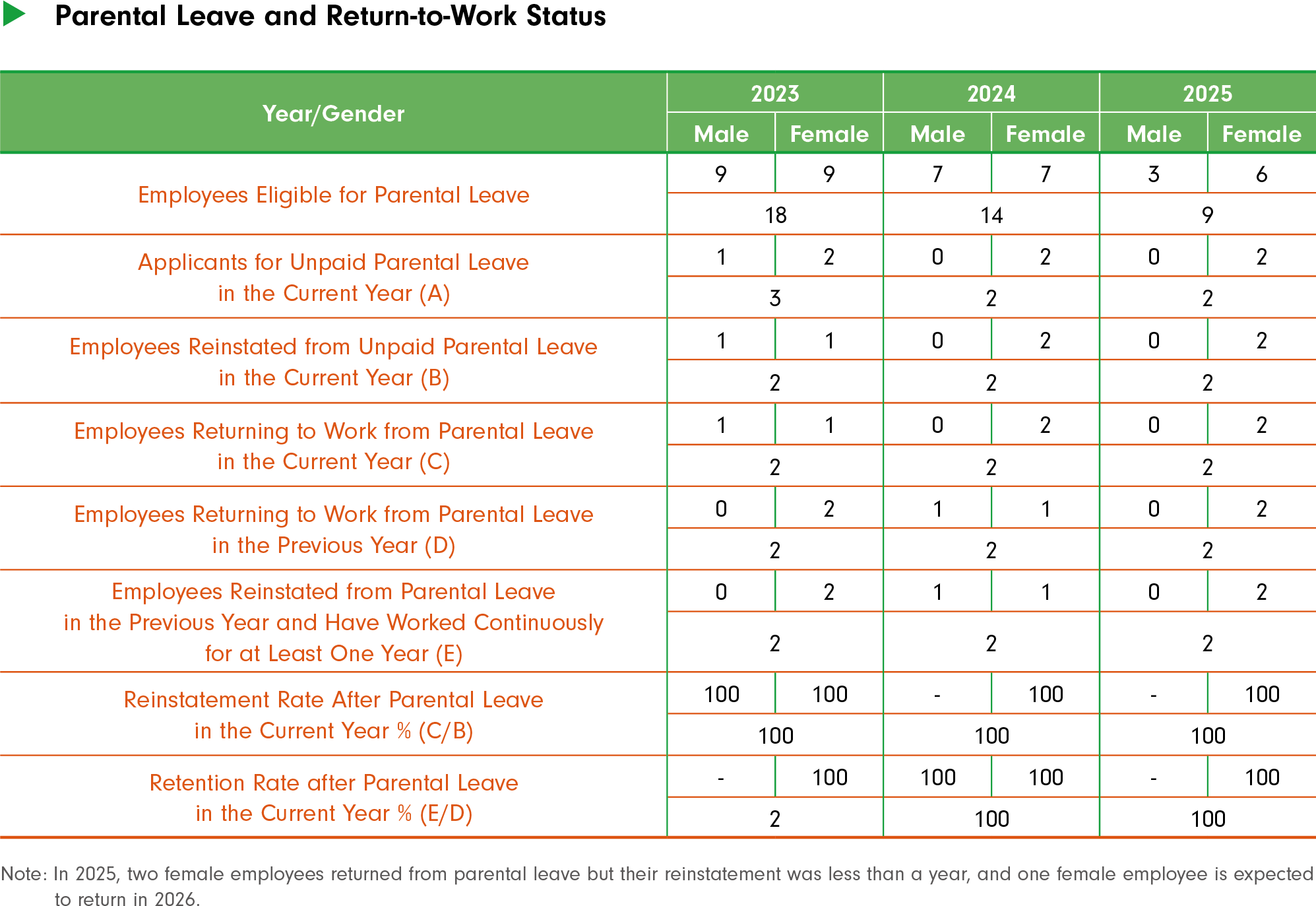
◉Parental LeaveThe Company proactively complies with government policies, encouraging childbirth, as well as those eligible to apply for parental leave. All regulations regarding employees’ unpaid parental leave are established in accordance with government regulations.